Items filtered by date: December 2023

Tuesday, 12 December 2023 00:00

What is a Podiatrist?

The branch of medicine that is focused on the treatment, diagnosis, and study of disorders of the lower leg, ankle and foot is referred to as podiatry. Because people often spend a great deal of their time on their feet, many problems in this area can occur. A person seeks help from the field of podiatry when they need treatment for heel spurs, bunions, arch problems, deformities, ingrown toenails, corns, foot and ankle problems, infections, and problems with the foot that are related to diabetes and additional diseases.

To treat problems of the foot, ankle or lower leg, a podiatrist may prescribe physical therapy, drugs, perform surgery, or set fractures. Individuals may also be recommended to wear corrective shoe inserts, custom-made shoes, plaster casts and strappings in order to correct deformities.

When trying to gather information on a patient problem, a scanner or force plate may be used in order to design orthotics. During this procedure, patients are told to walk across a plate that is connected to a computer; the computer then takes a scan of the foot and indicates weight distribution and pressure points. The computer readouts will give the podiatrist information to help them determine the correct treatment plans.

Diagnosis is also provided through laboratory tests and x-rays. Through the foot, the first signs of serious problems such as heart disease, diabetes and arthritis can show up. For example, individuals that have diabetes may frequently have problems such as infections and foot ulcers because they experience poor circulation in the foot area. A podiatrist can then have consultations with patients when symptoms arise. Referrals will then be made to specialists that handle the greater health problems.

Some podiatrists have their own independent, private practices or clinics where they have a small staff and administrative personnel. Many podiatrists work within group practices. They usually spend time performing surgery in ambulatory surgical centers or hospitals, or visit patients in nursing homes. Podiatrists typically spend between 30 to 60 hours of week working. Some podiatrists specialize in public health, orthopedics, surgery, or primary care. Other fields include specialties in geriatrics, dermatology, pediatrics, diabetic foot care and sports medicine.

Some podiatrist specialists complete extra training in the area of foot and ankle reconstruction that results from the effects of physical trauma or diabetes. There are also surgeons that perform surgery of a cosmetic nature to correct bunions and hammertoes.

Podiatrists, medical professionals specializing in the care of feet and ankles, play a vital role in promoting overall foot health. Their responsibilities extend to diagnosing and treating a diverse array of foot and ankle conditions, ranging from routine care to complex surgical interventions. Beyond addressing immediate concerns, podiatrists also educate patients on preventative measures and lifestyle choices to maintain optimal foot well-being. Working conditions for podiatrists often involve a combination of clinical and surgical settings. They may operate private practices, collaborate in group medical practices, or contribute to healthcare teams in hospitals. Regular interactions with patients necessitate effective communication skills, as podiatrists discuss medical histories, treatment plans, and educate individuals on proper foot care practices. The dynamic nature of podiatric work requires a blend of compassion, expertise, and a commitment to fostering the mobility and comfort of those seeking their specialized care. If you are interested in learning more about podiatry and its benefit to you, it is suggested that you confer with this type of doctor who can answer any questions you may have.

If you are dealing with pain in your feet and ankles, you may want to seek help from a podiatrist. Feel free to contact one of the podiatrists from JE Foot & Ankle Associates. Our doctors can provide the care you need to keep you pain-free and on your feet.

What Is a Podiatrist?

A podiatrist is a doctor of podiatric medicine who diagnoses and treats conditions of the foot, ankle, and related structures of the leg. Your podiatrist may specialize in a certain field such as sports medicine, wound care, pediatrics, and diabetic care. Podiatrists have the ability to become board certified through training, clinical experience, and then taking an exam.

What Do Podiatrists Do?

On a daily basis, a podiatrist may perform the following activities:

  • Diagnose foot ailments such as ulcers, tumors, fractures, etc.
  • Use innovative methods to treat conditions
  • Use corrective orthotics, casts, and strappings to correct deformities
  • Correct walking patterns and balance
  • Provide individual consultations to patients

It is very important that you take care of your feet. It’s easy to take having healthy feet for granted, however foot problems tend to be among the most common health conditions. Podiatrists can help diagnose and treat a variety of feet related conditions, so it is crucial that you visit one if you need assistance.

If you have any questions, please feel free to contact one of our offices located in Fleming Island and Palm Coast, FL . We offer the newest diagnostic and treatment technologies for all your foot care needs.

Read more about What is a Podiatrist?
Tuesday, 05 December 2023 00:00

Treating Your Child’s In-Toeing

Most people's feet typically point straight ahead or outward, but some children develop a condition known as in-toeing, where the feet point inward which is often referred to as pigeon toes. In-toeing is a common phenomenon in young children, and while it often corrects itself with time, some cases require attention and treatment, based on the underlying cause. Internal tibial torsion is one cause of in-toeing, and most doctors refrain from prescribing treatment for young children with this condition. Braces and special shoes are generally ineffective and rarely used due to their expense and children's reluctance to wear them. Surgical correction is only considered in cases where the twist in the tibia is severe and appearance becomes a concern. Excess femoral anteversion, another cause of in-toeing, typically improves on its own as children age. Braces or shoe modifications are generally not effective, and surgery is only considered in very severe cases where the inward twist of the thigh bone is significant. Metatarsus adductus, characterized by a curved foot shape, may involve stretching exercises or the use of casts or braces for more severe cases. Fortunately, any residual curvature post-treatment does not impede a child's ability to run and play, and it is not painful. If your child’s in-toeing seems to be problematic, it is suggested that you schedule an appointment with a podiatrist who can determine what the best treatment is.

The health of a child’s feet is vital to their overall well-being. If you have any questions regarding foot health, contact one of the podiatrists of JE Foot & Ankle Associates. Our doctors can provide the care you need to keep you pain-free and on your feet.

Tips for Keeping Children's Feet Healthy

  • Make sure their shoes fit properly
  • Look for any signs of in-toeing or out-toeing
  • Check to see if they have Clubfoot (condition that affects your child’s foot and ankle, twisting the heel and toes inward) which is one of the most common nonmajor birth defects.
  • Lightly cover your baby’s feet (Tight covers may keep your baby from moving their feet freely, and could prevent normal development)
  • Allow your toddler to go shoeless (Shoes can be restricting for a young child’s foot)
  • Cut toenails straight across to avoid ingrown toenails
  • Keep your child’s foot clean and dry
  • Cover cuts and scrapes. Wash any scratches with soap and water and cover them with a bandage until they’ve healed.

If you have any questions, please feel free to contact one of our offices located in Fleming Island and Palm Coast, FL . We offer the newest diagnostic and treatment technologies for all your foot care needs.

Read more about How to Care for Your Child's Feet
Tuesday, 05 December 2023 00:00

How to Care for Your Child's Feet

It is never normal for a child to experience pain in his or her feet. Foot pain that lasts more than a few days and limits a child’s ability to walk should be examined by a podiatrist. Many adult foot ailments originate in childhood and may be present at birth. Common foot issues that are experienced by children are pediatric flat foot, Sever’s disease, ingrown toenails, and plantar warts.

A child’s foot grows rapidly during the first year, allowing it to reach almost half of their adult foot size. Consequently, foot specialists consider the first year to be the most crucial point in the foot development process. There are ways you can help ensure that your child’s foot develops properly. One way is to carefully look at your baby’s feet. If you notice any deformities, you should immediately seek professional care. You should also loosely cover your child’s foot, since tight coverings may prevent movement and inhibit normal development. Another tip is to change the baby’s positioning throughout the day. If your baby lies down in one spot for too long, it may put an excess amount of strain on the feet and legs.

It is best that you try not to force a child to start walking. Children will begin to walk when they are both physically and emotionally capable to do so. You should also avoid comparing your child’s walking progress with other children because the age range for independent walking may range. When your child’s feet begin to develop, you may need to change both their shoe and sock size every few months to allow room for their feet to grow.

Kids are sometimes prone to splinters, cuts, and severe injuries because they tend to walk around barefoot. This also makes them more susceptible to developing plantar warts which is a condition caused by a virus that invades the sole of the foot through breaks in the skin. These ailments can be avoided by making sure your child wears shoes in unsanitary environments. You should also wash any minor cuts or scrapes on your child’s feet. It is a myth that exposure to fresh air will heal injuries; fresh air will only expose your child’s cuts to germs.

As a parent, you should ensure that your child’s feet are developing properly and are being properly maintained. Consequently, it is important that you perform routine inspections on his or her feet to detect any injuries or deformities in their early stages. Early detection and treatment will help to ensure that your child does not develop any serious foot conditions.

Tuesday, 05 December 2023 00:00

Treating Your Child’s In-Toeing
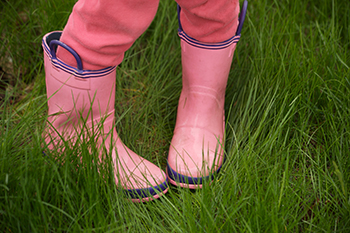
Most people's feet typically point straight ahead or outward, but some children develop a condition known as in-toeing, where the feet point inward which is often referred to as pigeon toes. In-toeing is a common phenomenon in young children, and while it often corrects itself with time, some cases require attention and treatment, based on the underlying cause. Internal tibial torsion is one cause of in-toeing, and most doctors refrain from prescribing treatment for young children with this condition. Braces and special shoes are generally ineffective and rarely used due to their expense and children's reluctance to wear them. Surgical correction is only considered in cases where the twist in the tibia is severe and appearance becomes a concern. Excess femoral anteversion, another cause of in-toeing, typically improves on its own as children age. Braces or shoe modifications are generally not effective, and surgery is only considered in very severe cases where the inward twist of the thigh bone is significant. Metatarsus adductus, characterized by a curved foot shape, may involve stretching exercises or the use of casts or braces for more severe cases. Fortunately, any residual curvature post-treatment does not impede a child's ability to run and play, and it is not painful. If your child’s in-toeing seems to be problematic, it is suggested that you schedule an appointment with a podiatrist who can determine what the best treatment is.

The health of a child’s feet is vital to their overall well-being. If you have any questions regarding foot health, contact one of the podiatrists of JE Foot & Ankle Associates. Our doctors can provide the care you need to keep you pain-free and on your feet.

Tips for Keeping Children's Feet Healthy

  • Make sure their shoes fit properly
  • Look for any signs of in-toeing or out-toeing
  • Check to see if they have Clubfoot (condition that affects your child’s foot and ankle, twisting the heel and toes inward) which is one of the most common nonmajor birth defects.
  • Lightly cover your baby’s feet (Tight covers may keep your baby from moving their feet freely, and could prevent normal development)
  • Allow your toddler to go shoeless (Shoes can be restricting for a young child’s foot)
  • Cut toenails straight across to avoid ingrown toenails
  • Keep your child’s foot clean and dry
  • Cover cuts and scrapes. Wash any scratches with soap and water and cover them with a bandage until they’ve healed.

If you have any questions, please feel free to contact one of our offices located in Fleming Island and Palm Coast, FL . We offer the newest diagnostic and treatment technologies for all your foot care needs.

Read more about How to Care for Your Child's Feet
Tuesday, 05 December 2023 00:00

How to Care for Your Child's Feet

It is never normal for a child to experience pain in his or her feet. Foot pain that lasts more than a few days and limits a child’s ability to walk should be examined by a podiatrist. Many adult foot ailments originate in childhood and may be present at birth. Common foot issues that are experienced by children are pediatric flat foot, Sever’s disease, ingrown toenails, and plantar warts.

A child’s foot grows rapidly during the first year, allowing it to reach almost half of their adult foot size. Consequently, foot specialists consider the first year to be the most crucial point in the foot development process. There are ways you can help ensure that your child’s foot develops properly. One way is to carefully look at your baby’s feet. If you notice any deformities, you should immediately seek professional care. You should also loosely cover your child’s foot, since tight coverings may prevent movement and inhibit normal development. Another tip is to change the baby’s positioning throughout the day. If your baby lies down in one spot for too long, it may put an excess amount of strain on the feet and legs.

It is best that you try not to force a child to start walking. Children will begin to walk when they are both physically and emotionally capable to do so. You should also avoid comparing your child’s walking progress with other children because the age range for independent walking may range. When your child’s feet begin to develop, you may need to change both their shoe and sock size every few months to allow room for their feet to grow.

Kids are sometimes prone to splinters, cuts, and severe injuries because they tend to walk around barefoot. This also makes them more susceptible to developing plantar warts which is a condition caused by a virus that invades the sole of the foot through breaks in the skin. These ailments can be avoided by making sure your child wears shoes in unsanitary environments. You should also wash any minor cuts or scrapes on your child’s feet. It is a myth that exposure to fresh air will heal injuries; fresh air will only expose your child’s cuts to germs.

As a parent, you should ensure that your child’s feet are developing properly and are being properly maintained. Consequently, it is important that you perform routine inspections on his or her feet to detect any injuries or deformities in their early stages. Early detection and treatment will help to ensure that your child does not develop any serious foot conditions.

If you are suffering from tenderness, pain, or stiffness in the joints of your feet or ankles, call us to schedule an appointment.

Page 2 of 2

scroll to top