Plantar Wart Removal in Fleming Island, FL
Plantar Wart Symptoms and Complications
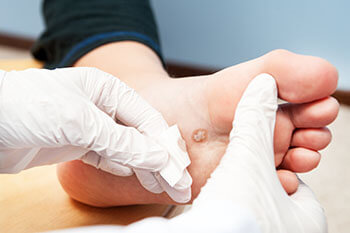 If you notice small bumps around the heel or weight-bearing areas of your feet, you may have developed plantar warts. When the HPV virus enters the skin through an opening, such as a small cut or scrape, plantar warts can form and often cause discomfort. Some indicators that you have plantar warts include feeling pain in the soles of the feet when standing or walking and the formation of small fleshy growths, sometimes including a tiny black dot in the center of the bump.
Plantar warts can cause some pain while standing, sometimes felt as tenderness on the sole of your foot. Unless the wart has grown into the foot behind a callus, you will be able to see the fleshy wart. Because plantar warts are not cancerous or dangerous, a podiatrist should only be consulted if there is an excess amount of pain associated with having them, if they are affecting your walking, or if they continually come back. However, anyone who suffers from diabetes or a compromised immune system disease should seek out care immediately.
Because pressure from walking pushes plantar warts inward, they often appear flat and may be covered by a layer of hard skin. The small black dots often seen in a wart are tiny clotted blood vessels. Warts may appear on their own or grow in clusters, known as mosaic warts. Plantar warts are sometimes mistaken for corns or calluses. One difference is that warts interrupt the normal lines of the skin and are often more painful when squeezed from the sides, while corns tend to hurt with direct pressure.
What Causes Plantar Warts
HPV causes plantar warts to form and is very common. There are more than 100 kinds of the virus in existence. However, only a few of them cause warts on the feet. The other types of HPV are likely to cause warts on other parts of the body.
The virus thrives in warm, moist environments and can enter the skin through tiny cuts, cracks, or areas where the skin is softened by moisture. Plantar warts are especially common in children, teenagers, and people with weakened immune systems, although anyone can develop them. Not everyone who comes into contact with the virus will develop a wart, since each person’s immune system responds differently.
Preventing Plantar Warts
To best prevent getting plantar warts, it’s advised to keep your hands and feet clean and wash them regularly. It’s also important to ensure you wear appropriate footwear in public areas such as swimming pools, locker rooms, and communal showers. Because plantar warts are contagious, it’s especially important for those with a weaker immune system to make sure they take the above precautions. If you believe you’ve developed plantar warts and are experiencing severe pain, swelling, redness, or bleeding, it’s advised to seek professional care.
Other helpful steps include keeping your feet dry, changing your socks daily, and not sharing towels, socks, or shoes. Avoid picking at or scratching warts, as this can spread the virus to other areas of your body. If someone in your household has a wart, keep it covered and wear sandals in shared showers.
Plantar Wart Treatment Options
Some plantar warts go away on their own, but this can take a long time, and many people prefer treatment because of pain or concerns about spreading them. Over-the-counter products containing salicylic acid may help some warts, but they can irritate healthy skin and should be avoided by people with diabetes or poor circulation unless recommended by a podiatrist.
When home treatment does not work, your podiatrist can offer more effective options. Treatment may include trimming away the overlying hard skin, prescription-strength topical medications, cryotherapy to freeze the wart, and other in-office treatments designed to remove the wart and stimulate the body’s immune response. In stubborn cases, minor surgical removal may be considered. Several treatments are sometimes needed before a wart is fully cleared, and your podiatrist will recommend the approach that best suits your situation.
When to See a Podiatrist
Make an appointment if a wart is painful, changes in appearance or color, bleeds, keeps returning, or spreads. You should also have any growth on your foot evaluated if you are not sure whether it is a wart. Anyone with diabetes, neuropathy, or a weakened immune system should seek care rather than treating warts at home.
For more information about plantar warts, we recommend you consult with a podiatrist for a proper diagnosis and advised treatment plan.
