Achilles Tendonitis Treatment in Fleming Island, FL
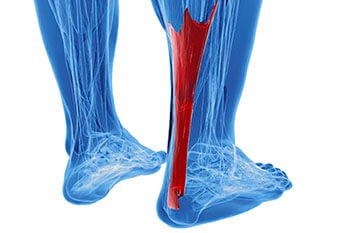 A condition that often results in serious heel pain is known as Achilles tendonitis. This condition may form when the Achilles tendon is damaged as a result of overuse. This particular injury can be very serious, as the Achilles tendon’s main function is to connect the lower half of the calf muscles to the heel bone. If this tendon becomes damaged, it may result in difficulty walking and completing everyday tasks, as well as cause extreme discomfort and pain.
The Achilles tendon is the largest and strongest tendon in the body, yet it is placed under enormous strain every time you walk, climb stairs, run, or jump. Pain from Achilles tendonitis is usually felt at the back of the heel or a few inches above it. Many patients notice stiffness and soreness first thing in the morning that eases slightly as they move around, only to return after activity. The area may also feel tender to the touch, appear swollen, or feel warm. Some people notice a thickening of the tendon over time, which can be a sign that the problem has been developing for a while.
Achilles Tendon Injuries in Athletes
It’s more common for athletes to experience Achilles tendon injuries, as they’re more likely to be participating in activities that would call for repetitive movement, such as running or jogging. This kind of repetitive movement over time is likely to cause stress on the tendon. When athletes abruptly increase their performance level without properly training or warming up their bodies, they may also injure the Achilles tendon, which may lead to inflexibility in the calf muscles.
Athletes are not the only people at risk. Weekend exercisers who are very active on some days and inactive on others, people who suddenly start a new exercise program, and those who run on hills or hard surfaces can all place extra stress on the tendon. Tight calf muscles, flat feet, and worn-out or unsupportive shoes may also change the way force travels through the lower leg and heel. The tendon also tends to lose some of its flexibility with age, which is why Achilles problems are frequently seen in middle-aged adults who remain active.
Achilles Tendon Rupture
An Achilles tendon rupture is trickier to heal and is by far the most painful injury. It is caused by the tendon ripping or completely snapping. The results are immediate and absolutely devastating, and will render the patient immobile. If a rupture or tear occurs, operative and non-operative methods are available. Once the treatment begins, depending on the severity of the injury, recovery time for these types of issues can take up to a year.
Many people who rupture the Achilles tendon describe hearing or feeling a pop or snap at the back of the ankle, followed by sudden, sharp pain. Some say it feels as though they have been kicked in the back of the leg. Swelling and bruising often follow, and it may be very difficult to push off the foot, stand on the toes, or walk normally. A suspected rupture should be evaluated as soon as possible, as prompt diagnosis gives you the widest range of treatment options and the best chance of a full recovery.
Achilles Tendonitis Prevention
In order to prevent this kind of injury, it’s suggested to perform stretches—particularly focused on the calf region—about one to three times a day to keep the area flexible. Focusing on building strength in your calves is also advised. If you believe you’ve injured your Achilles tendon, there are some actions you can take to help alleviate the discomfort. Icing and massaging the affected area may help to calm the pain, as well as practicing light stretches.
Other simple habits can also lower your risk. Warm up before exercise and cool down afterward, increase the length and intensity of your workouts gradually, and alternate high-impact activities such as running with low-impact options like swimming or cycling. Wearing supportive athletic shoes that suit your activity, and replacing them once the cushioning wears down, helps reduce the strain placed on the tendon. If you notice pain at the back of your heel, it is best to rest rather than trying to push through the discomfort.
How Our Podiatrists Treat Achilles Tendon Injuries
Treatment begins with a careful examination of your foot, ankle, and lower leg. Your podiatrist will ask about your symptoms and activity level, check the tendon for tenderness, swelling, and thickening, and assess your range of motion. In some cases, imaging such as x-rays or an ultrasound may be recommended to evaluate the tendon and rule out other conditions.
Most cases of Achilles tendonitis respond well to conservative care. Depending on your condition, your treatment plan may include rest and activity modification, icing, anti-inflammatory medication, a structured stretching and strengthening program, heel lifts, supportive footwear, or custom orthotics that reduce stress on the tendon. A walking boot may be used for a short period to allow the tendon to calm down. If conservative treatment does not bring relief, or if the tendon has ruptured, your podiatrist will discuss other options with you, including surgical repair when appropriate.
If you’re having difficulty walking or icing the area does not alleviate the pain, it’s highly advised that you speak with a podiatrist for professional care and an advised treatment plan.
