Blog
Items filtered by date: June 2020
Monday, 29 June 2020 00:00
How Can I Be Sure I’m Choosing the Right Shoe for My Child?
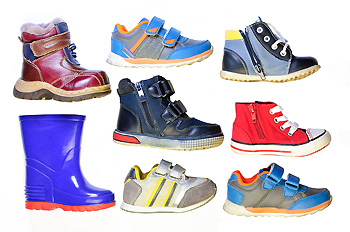
When it comes to shopping for shoes with your child, there are a number of ways you can help ensure a comfortable fit. As far as choosing the correct shoe size, it is best that you are measuring your child’s feet frequently. You also want to make sure the shoes you are buying are beneficial to your child in particular. For example, if your child’s feet need arch support, it would be best to focus on shoes with that particular feature. With all shoes, it is important to pick ones that are breathable, durable, and flexible. Since children’s feet tend to get sweaty, finding a breathable material can encourage circulation for your child’s feet. Since the feet do swell, it is best to shop for shoes at the end of the day, that way your child’s feet are at their largest, and you can avoid picking footwear that is to tight for them. For more help on how to best purchase footwear for your child, please consult with a podiatrist.
It is important to find shoes that fit you properly in order to avoid a variety of different foot problems. For more information about treatment, contact one of the podiatrists from JE Foot & Ankle Associates. Our doctors will treat your foot and ankle needs.
Proper Shoe Fitting
Shoes have many different functions. They cushion our body weight, protect our feet, and allow us to safely play sports. You should always make sure that the shoes you wear fit you properly in order to avoid injuries and deformities such as: bunions, corns, calluses, hammertoes, plantar fasciitis, stress fractures, and more. It is important to note that although a certain pair of shoes might be a great fit for someone else, that doesn’t mean they will be a great fit for you. This is why you should always try on shoes before buying them to make sure they are worth the investment. Typically, shoes need to be replaced ever six months to one year of regular use.
Tips for Proper Shoe Fitting
- Select a shoe that is shaped like your foot
- Don’t buy shoes that fit too tight, expecting them to stretch to fit
- Make sure there is enough space (3/8” to ½”) for your longest toe at the end of each shoe when you are standing up
- Walk in the shoes to make sure they fit and feel right
- Don’t select shoes by the size marked inside the shoe, but by how the shoe fits your foot
The shoes you buy should always feel as good as they look. Shoes that fit properly will last longer, feel better, and improve your way of life each day.
If you have any questions, please feel free to contact one of our offices located in Fleming Island and Palm Coast, FL . We offer the newest diagnostic and treatment technologies for all your foot care needs.
Monday, 22 June 2020 00:00
Diagnosing and Treating Morton’s Neuroma
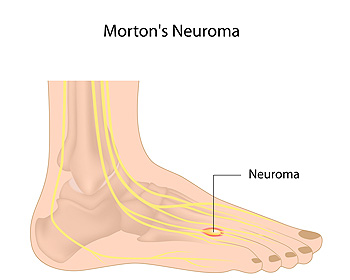 Morton’s neuroma occurs when a nerve in the foot that provides feeling in the toes becomes irritated or damaged. As the nerve thickens, the pressure from the neighboring bones increases and causes more irritation. Ultimately, this leads to abnormal feelings in the toes such as pain, numbness, and tingling. Morton’s neuroma can be caused by wearing tightly-fitted shoes, frequently running, or from having other foot conditions such as flat feet or high arches. The first step in treating Morton’s neuroma is switching to flat shoes with a wide sole and getting plenty of rest. However, in many cases, a podiatrist should be consulted. A podiatrist will be able to suggest treatments that may include custom-made insoles, pain killing injections, or in severe cases, surgery.
Morton’s neuroma is a very uncomfortable condition to live with. If you think you have Morton’s neuroma, contact one of the podiatrists of JE Foot & Ankle Associates. Our doctors will attend to all of your foot care needs and answer any of your related questions.
Morton’s Neuroma
Morton's neuroma is a painful foot condition that commonly affects the areas between the second and third or third and fourth toe, although other areas of the foot are also susceptible. Morton’s neuroma is caused by an inflamed nerve in the foot that is being squeezed and aggravated by surrounding bones.
What Increases the Chances of Having Morton’s Neuroma?
- Ill-fitting high heels or shoes that add pressure to the toe or foot
- Jogging, running or any sport that involves constant impact to the foot
- Flat feet, bunions, and any other foot deformities
Morton’s neuroma is a very treatable condition. Orthotics and shoe inserts can often be used to alleviate the pain on the forefront of the feet. In more severe cases, corticosteroids can also be prescribed. In order to figure out the best treatment for your neuroma, it’s recommended to seek the care of a podiatrist who can diagnose your condition and provide different treatment options.
If you have any questions, please feel free to contact one of our offices located in Fleming Island and Palm Coast, FL . We offer the newest diagnostic and treatment technologies for all your foot care needs.
Monday, 15 June 2020 00:00
Shoes And Genetics May Cause Bunions
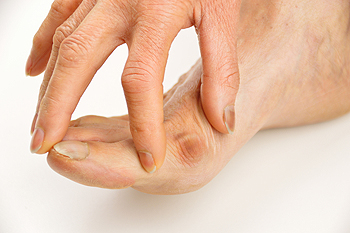 A common reason patients may develop bunions can be from the shoes that are frequently worn. Many shoes have inadequate room for the toes to move freely in, which may cause the bone on the side of the big toe to protrude. Additionally, research has indicated that genetics may play a significant role in the development of a bunion. The bunion may cause the shape of the foot to change, and larger shoes may have to be purchased. An existing bunion can cause the inability to bend or strengthen the big toe, and it may become red and swollen. If you are afflicted with a bunion, it is advised that you consult with a podiatrist who can offer the best treatment for you.
If you are suffering from bunion pain, contact one of the podiatrists of JE Foot & Ankle Associates. Our doctors can provide the care you need to keep you pain-free and on your feet.
What Is a Bunion?
Bunions are painful bony bumps that usually develop on the inside of the foot at the joint of the big toe. As the deformity increases over time, it may become painful to walk and wear shoes. Women are more likely to exacerbate existing bunions since they often wear tight, narrow shoes that shift their toes together. Bunion pain can be relieved by wearing wider shoes with enough room for the toes.
Causes
- Genetics – some people inherit feet that are more prone to bunion development
- Inflammatory Conditions - rheumatoid arthritis and polio may cause bunion development
Symptoms
- Redness and inflammation
- Pain and tenderness
- Callus or corns on the bump
- Restricted motion in the big toe
In order to diagnose your bunion, your podiatrist may ask about your medical history, symptoms, and general health. Your doctor might also order an x-ray to take a closer look at your feet. Nonsurgical treatment options include orthotics, padding, icing, changes in footwear, and medication. If nonsurgical treatments don’t alleviate your bunion pain, surgery may be necessary.
If you have any questions, please feel free to contact one of our offices located in Fleming Island and Palm Coast, FL . We offer the newest diagnostic and treatment technologies for all your foot care needs.
Monday, 08 June 2020 00:00
Who May Be Prone to Getting Cuboid Syndrome?
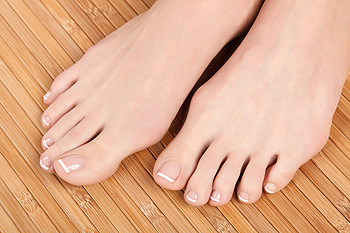 There are twenty-six bones in each foot, and the cuboid bone is located on the outside edge below the ankle. The condition that is known as cuboid syndrome can occur as a result of overstretched or torn tendons which connect to the cuboid bone. It can be a common ailment among people who frequently participate in running and jumping activities, and cause pain and discomfort. Common symptoms that can be associated with cuboid syndrome can consist of a dull ache when this condition occurs from repetitive strain. If a sudden injury occurs, a sharp pain is immediately felt, and it may be difficult to walk. Effective treatment can consist of resting the affected foot, followed by introducing techniques that can return the tendons to their normal alignment. If you are experiencing pain in the outside of your foot, it is suggested that you consult with a podiatrist who can properly diagnose cuboid syndrome.
Cuboid syndrome, also known as cuboid subluxation, occurs when the joints and ligaments near the cuboid bone in the foot become torn. If you have cuboid syndrome, consult with one of the podiatrists from JE Foot & Ankle Associates. Our doctors will assess your condition and provide you with quality foot and ankle treatment.
Cuboid syndrome is a common cause of lateral foot pain, which is pain on the outside of the foot. The condition may happen suddenly due to an ankle sprain, or it may develop slowly overtime from repetitive tension through the bone and surrounding structures.
Causes
The most common causes of cuboid syndrome include:
- Injury – The most common cause of this ailment is an ankle sprain.
- Repetitive Strain – Tension placed through the peroneus longus muscle from repetitive activities such as jumping and running may cause excessive traction on the bone causing it to sublux.
- Altered Foot Biomechanics – Most people suffering from cuboid subluxation have flat feet.
Symptoms
A common symptom of cuboid syndrome is pain along the outside of the foot which can be felt in the ankle and toes. This pain may create walking difficulties and may cause those with the condition to walk with a limp.
Diagnosis
Diagnosis of cuboid syndrome is often difficult, and it is often misdiagnosed. X-rays, MRIs and CT scans often fail to properly show the cuboid subluxation. Although there isn’t a specific test used to diagnose cuboid syndrome, your podiatrist will usually check if pain is felt while pressing firmly on the cuboid bone of your foot.
Treatment
Just as the range of causes varies widely, so do treatments. Some more common treatments are ice therapy, rest, exercise, taping, and orthotics.
If you have any questions, please feel free to contact one of our offices located in Fleming Island and Palm Coast, FL . We offer the newest diagnostic and treatment technologies for all your foot care needs.
Friday, 05 June 2020 00:00
Are Bunions Affecting Your Everyday Life?
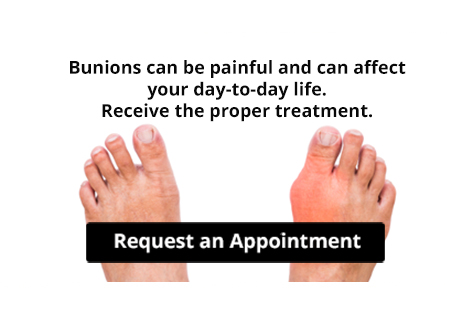
Have you noticed a bony protrusion on the side of your big toe? If so, you may have developed the foot condition known as a bunion. Don't let bunions interfere with your daily activities.
Monday, 01 June 2020 00:00
Excessively Sweaty Feet
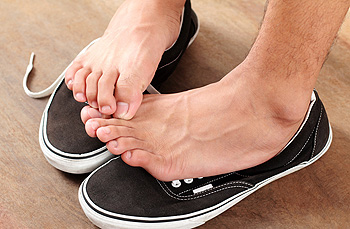 Although sweating while working out is common, if you find yourself excessively sweating, especially in the foot region, you may have developed a condition that is known as hyperhidrosis. This can cause excessive sweating even with minimal physical activity. Gout, diabetes, low blood sugar, and issues with the thyroid or nervous system, may all be additional causes to hyperhidrosis. Genetics and body weight can be factors as well. This condition can also cause an unpleasant odor to come from the affected area. If you are experiencing more than normal sweating of the feet, and would like information on treatment techniques, please consult with a podiatrist.
If you are suffering from hyperhidrosis contact one of the podiatrists of JE Foot & Ankle Associates. Our doctors can provide the care you need to attend to all of your foot and ankle needs.
Hyperhidrosis of the Feet
Hyperhidrosis is a rare disorder that can cause people to have excessive sweating of their feet. This can usually occur all on its own without rigorous activity involved. People who suffer from hyperhidrosis may also experience sweaty palms.
Although it is said that sweating is a healthy process meant to cool down the body temperature and to maintain a proper internal temperature, hyperhidrosis may prove to be a huge hindrance on a person’s everyday life.
Plantar hyperhidrosis is considered to be the main form of hyperhidrosis. Secondary hyperhidrosis can refer to sweating that occurs in areas other than the feet or hands and armpits. Often this may be a sign of it being related to another medical condition such as menopause, hyperthyroidism and even Parkinson’s disease.
In order to alleviate this condition, it is important to see your doctor so that they may prescribe the necessary medications so that you can begin to live a normal life again. If this is left untreated, it is said that it will persist throughout an individual’s life.
A last resort approach would be surgery, but it is best to speak with your doctor to find out what may be the best treatment for you.
If you have any questions please feel free to contact one of our offices located in Fleming Island and Palm Coast, FL . We offer the newest diagnostic and treatment technologies for all your foot and ankle needs.
Blog Archives
- April 2025
- March 2025
- February 2025
- January 2025
- December 2024
- November 2024
- October 2024
- September 2024
- August 2024
- July 2024
- June 2024
- May 2024
- April 2024
- March 2024
- February 2024
- January 2024
- December 2023
- November 2023
- October 2023
- September 2023
- August 2023
- July 2023
- June 2023
- May 2023
- April 2023
- March 2023
- February 2023
- January 2023
- December 2022
- November 2022
- October 2022
- September 2022
- August 2022
- July 2022
- June 2022
- May 2022
- April 2022
- March 2022
- February 2022
- January 2022
- December 2021
- November 2021
- October 2021
- September 2021
- August 2021
- July 2021
- June 2021
- May 2021
- April 2021
- March 2021
- February 2021
- January 2021
- December 2020
- November 2020
- October 2020
- September 2020
- August 2020
- July 2020
- June 2020
- May 2020
- April 2020
- March 2020
- February 2020
- January 2020
- December 2019
- November 2019
- October 2019
- September 2019
