Blog
Items filtered by date: March 2025
Tuesday, 25 March 2025 00:00
How to Identify and Treat a Corn
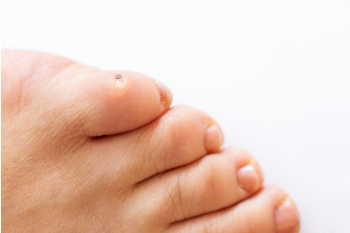
Corns are hard, thickened areas of skin that typically form on the toes or feet, often with a cone-like shape pointing inward. They develop due to friction and pressure, commonly from wearing ill-fitting shoes, high heels, or repetitive activities like walking or running. The constant pressure causes the skin to thicken as a protective response, leading to pain and discomfort, especially while walking. While home treatments may offer temporary relief, professional care from a podiatrist is often necessary for persistent or painful corns. A podiatrist can remove corns safely and effectively using specialized instruments, reducing the risk of infection or further damage to the skin. This type of doctor can also assess your foot structure, gait, and footwear, identifying underlying causes like bunions, hammertoes, or misalignment. Afterward, they can recommend custom orthotics, proper footwear, or other treatment to prevent future corns. If you have corns on the feet, it is suggested that you schedule an appointment with a podiatrist for an evaluation and safe treatment.
Corns can make walking very painful and should be treated immediately. If you have questions regarding your feet and ankles, contact one of the podiatrists of JE Foot & Ankle Associates. Our doctors will treat your foot and ankle needs.
Corns: What Are They? And How Do You Get Rid of Them?
Corns are thickened areas on the skin that can become painful. They are caused by excessive pressure and friction on the skin. Corns press into the deeper layers of the skin and are usually round in shape.
Ways to Prevent Corns
There are many ways to get rid of painful corns such as:
- Wearing properly fitting shoes that have been measured by a professional
- Wearing shoes that are not sharply pointed or have high heels
- Wearing only shoes that offer support
Treating Corns
Although most corns slowly disappear when the friction or pressure stops, this isn’t always the case. Consult with your podiatrist to determine the best treatment option for your case of corns.
If you have any questions please feel free to contact one of our offices located in Fleming Island and Palm Coast, FL . We offer the newest diagnostic and treatment technologies for all your foot and ankle needs.
Tuesday, 18 March 2025 00:00
Pressure Injuries Versus Diabetic Foot Ulcers
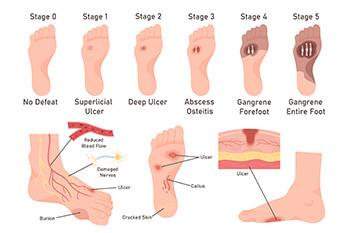
Pressure injuries and diabetic foot wounds may look similar, but they develop differently and require distinct care. Pressure injuries, or bedsores, result from prolonged pressure on the skin, often affecting people with limited mobility. They typically form over bony areas like heels and ankles, breaking down skin and deeper tissues. Diabetic foot wounds stem from a combination of poor circulation and nerve damage. Without proper sensation, minor cuts or blisters can go unnoticed, leading to infections or even ulcers that fail to heal. These wounds are especially dangerous because diabetes impairs the body's ability to fight infections and repair tissue. Both conditions can lead to serious complications, including infection and even limb loss. If you have any type of foot wound, it is strongly suggested that you see a podiatrist for a thorough exam and appropriate treatment.
Wound care is an important part in dealing with diabetes. If you have diabetes and a foot wound or would like more information about wound care for diabetics, consult with one of the podiatrists from JE Foot & Ankle Associates. Our doctors will assess your condition and provide you with quality foot and ankle treatment.
What Is Wound Care?
Wound care is the practice of taking proper care of a wound. This can range from the smallest to the largest of wounds. While everyone can benefit from proper wound care, it is much more important for diabetics. Diabetics often suffer from poor blood circulation which causes wounds to heal much slower than they would in a non-diabetic.
What Is the Importance of Wound Care?
While it may not seem apparent with small ulcers on the foot, for diabetics, any size ulcer can become infected. Diabetics often also suffer from neuropathy, or nerve loss. This means they might not even feel when they have an ulcer on their foot. If the wound becomes severely infected, amputation may be necessary. Therefore, it is of the upmost importance to properly care for any and all foot wounds.
How to Care for Wounds
The best way to care for foot wounds is to prevent them. For diabetics, this means daily inspections of the feet for any signs of abnormalities or ulcers. It is also recommended to see a podiatrist several times a year for a foot inspection. If you do have an ulcer, run the wound under water to clear dirt from the wound; then apply antibiotic ointment to the wound and cover with a bandage. Bandages should be changed daily and keeping pressure off the wound is smart. It is advised to see a podiatrist, who can keep an eye on it.
If you have any questions, please feel free to contact one of our offices located in Fleming Island and Palm Coast, FL . We offer the newest diagnostic and treatment technologies for all your foot care needs.
Tuesday, 11 March 2025 00:00
Causes of Blisters in Ballet Dancers
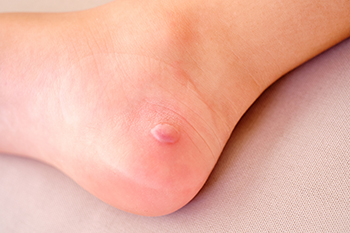
Blisters are a common issue for ballet dancers due to the intense physical demands placed on their feet. Constant friction from ballet shoes, especially pointe shoes, can cause the skin to rub against the shoe material, leading to fluid-filled blisters. Moisture from sweat softens the skin, making it more prone to irritation and breakdown. Repetitive movements such as turning, jumping, and balancing place pressure on specific areas of the foot, increasing the likelihood of blister formation. Ill-fitting shoes or improper padding can also contribute to excessive rubbing. Additionally, dancers who transition to pointe work too quickly may experience more severe blisters as their feet adjust to the strain. A foot blister can be uncomfortable and may cause dancing to stop until it completely heals. If you enjoy dancing and have developed blisters, it is suggested that you confer with a podiatrist who can offer effective relief and prevention tips.
Blisters are prone to making everyday activities extremely uncomfortable. If your feet are hurting, contact one of the podiatrists of JE Foot & Ankle Associates. Our doctors can provide the care you need to keep you pain-free and on your feet.
Foot Blisters
Foot blisters develop as a result of constantly wearing tight or ill-fitting footwear. This happens due to the constant rubbing from the shoe, which can often lead to pain.
What Are Foot Blisters?
A foot blister is a small fluid-filled pocket that forms on the upper-most layer of the skin. Blisters are filled with clear fluid and can lead to blood drainage or pus if the area becomes infected.
How Do Blisters Form?
Blisters on the feet are often the result of constant friction of skin and material, usually by shoe rubbing. Walking in sandals, boots, or shoes that don’t fit properly for long periods of time can result in a blister. Having consistent foot moisture and humidity can easily lead to blister formation.
Prevention & Treatment
It is important to properly care for the affected area in order to prevent infection and ease the pain. Do not lance the blister and use a Band-Aid to provide pain relief. Also, be sure to keep your feet dry and wear proper fitting shoes. If you see blood or pus in a blister, seek assistance from a podiatrist.
If you have any questions, please feel free to contact one of our offices located in Fleming Island and Palm Coast, FL . We offer the newest diagnostic and treatment technologies for all your foot care needs.
Tuesday, 04 March 2025 00:00
A Foot Condition Called Plantar Fibroma
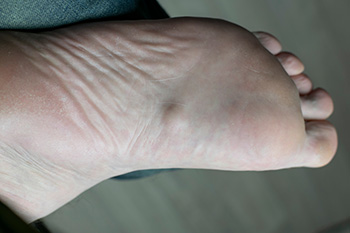
Plantar fibroma is a benign growth that develops in the arch of the foot, specifically in the plantar fascia, a thick band of tissue that runs along the bottom of the foot. This condition results in the formation of nodules or lumps, which may be felt as hard, firm areas beneath the skin. The primary cause of plantar fibroma is not well understood, but genetic factors, trauma, or abnormal foot mechanics may contribute to its development. Symptoms typically include localized pain or discomfort, especially when standing or walking, and the presence of a visible lump or thickening in the foot. Over time, the fibroma may become larger, making it more difficult to wear certain shoes or engage in physical activities. If you have a lump on the bottom of your foot, it is suggested that you consult a podiatrist who can provide a proper diagnosis and treatment.
A plantar fibroma may disrupt your daily activities. If you have any concerns, contact one of the podiatrists of JE Foot & Ankle Associates. Our doctors can provide the care you need to keep you pain-free and on your feet.
Plantar Fibroma
A plantar fibroma is a fibrous knot in the arch of the foot. It is embedded in the plantar fascia which is a band of tissue that extends from the heel to the toes along the bottom of the foot. There can be multiple plantar fibromas in the feet at the same time. There are no known causes for this condition. If you have a plantar fibroma, there will be a bump in the arch of your foot that cannot be missed. Any associated pain is most often due to a shoe rubbing against the nodule. Non-surgical options, such as steroid injections, physical therapy, and orthotics should be tried first. Surgery is a last resort and is the only thing that will remove a plantar fibroma entirely. Consult with a podiatrist for a proper diagnosis and to determine the treatment regimen that is right for you.
What Causes a Plantar Fibroma?
While there are no specific causes identified, a plantar fibroma can possibly come from genetic predisposition or the formation of scar tissue that forms from healing the tears in the plantar fascia.
What Are the Symptoms of a Plantar Fibroma?
There will be a noticeable lump in the arch of the foot that may or may not cause pain. If pain is felt, it is typically because a shoe is rubbing up against the lump or when walking or standing barefoot.
Treatment and Prevention
A plantar fibroma will not disappear without treatment, but it can get smaller and be a non-issue. If pain persists, a podiatrist examines the foot and when the arch of the foot is pressed, pain can be felt down to the toes. An MRI or biopsy might be performed to help diagnose or evaluate the plantar fibroma. The following non-surgical options are generally enough to reduce the size and pain of these nodules:
- Steroid injections
- Orthotics
- Physical therapy to help apply anti-inflammatory creams on the bump
Surgery is considered if the mass increases in size and the patient continues to feel pain after non-surgical methods are tried.
If you have any questions please feel free to contact one of our offices located in Fleming Island and Palm Coast, FL . We offer the newest diagnostic tools and technology to treat your foot and ankle needs.
Sunday, 02 March 2025 00:00
Reminder: When Was the Last Time...?

Custom orthotics, or shoe inserts, should be periodically replaced. Orthotics must fit properly to give you the best results. Protect your feet and ankles!
Blog Archives
- April 2025
- March 2025
- February 2025
- January 2025
- December 2024
- November 2024
- October 2024
- September 2024
- August 2024
- July 2024
- June 2024
- May 2024
- April 2024
- March 2024
- February 2024
- January 2024
- December 2023
- November 2023
- October 2023
- September 2023
- August 2023
- July 2023
- June 2023
- May 2023
- April 2023
- March 2023
- February 2023
- January 2023
- December 2022
- November 2022
- October 2022
- September 2022
- August 2022
- July 2022
- June 2022
- May 2022
- April 2022
- March 2022
- February 2022
- January 2022
- December 2021
- November 2021
- October 2021
- September 2021
- August 2021
- July 2021
- June 2021
- May 2021
- April 2021
- March 2021
- February 2021
- January 2021
- December 2020
- November 2020
- October 2020
- September 2020
- August 2020
- July 2020
- June 2020
- May 2020
- April 2020
- March 2020
- February 2020
- January 2020
- December 2019
- November 2019
- October 2019
- September 2019
